Amazon Brand Advocacy Funnel: Packaging to Loyalty
Amazon brand advocacy funnel: where the leak actually lives
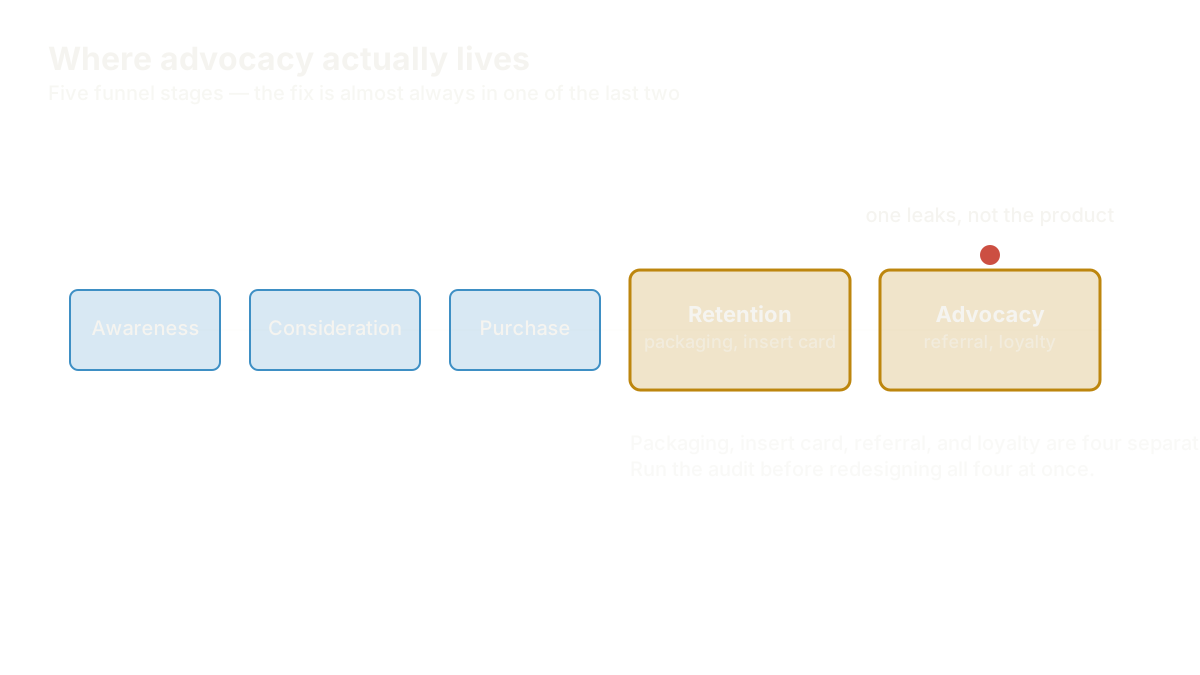
An Amazon brand advocacy funnel is the chain of touchpoints after the sale (packaging and unboxing, the insert card inside the box, the referral ask, and for some brands a loyalty community) that turns a one-time buyer into someone who buys again and tells other people to buy too. If you're an Amazon brand owner who has shipped a good product for a year and still can't point to a repeat-purchase number or a referral source you trust, the problem almost never sits in all four touchpoints at once. It sits in one. This guide walks the whole advocacy funnel end to end, tells you how to tell evidence from vibes at each stage, and gives you a framework for finding the single weakest touchpoint instead of redesigning everything on a hunch.
Say your unboxing looks great in photos, your insert card has a QR code on it, you tried a referral program eighteen months ago and quietly let it lapse, and you've never seriously considered a loyalty community because it sounded like too much infrastructure for a brand your size. That's not four problems. That's one diagnosis waiting to happen, and it starts with treating "advocacy" as a funnel with real touchpoints instead of a vibe your packaging designer promised you.
Does packaging and unboxing actually move repeat purchase?
The unboxing-experience question is the one founders ask first and answer last, because "does packaging affect repeat purchase" feels unanswerable without a controlled study most one-person brands can't run. It's answerable with evidence you already have. ingest_evidence pulls the language customers actually use in reviews, and reading whether your own reviews even mention the unboxing experience tells you more than any packaging-design opinion will. If nobody's reviews mention the box, the felt moment isn't landing, or it isn't happening at all.
That's different from assuming packaging investment is worthless. One founder's actual test of whether unboxing experience affects repeat purchase found a real, if modest, lift, but only after she stopped treating "nice packaging" as the goal and started treating it as one touchpoint in a funnel with a job to do: prove the Empathetic pillar, not just look premium in a photo. Unboxing has a second life past the box itself, too. A kitchen-gadget brand's unboxing moment became the spine of a paid social ad, because the same reaction that earns a repeat customer also earns a scroll-stopping ad when it's real and not staged.
Making an insert card do more than hand out a coupon
An insert card is the cheapest, most controllable touchpoint in the whole advocacy funnel, and it's also the one most brand owners under-design because it feels like an afterthought stapled onto packaging that already shipped. One founder's insert card was just a discount coupon: accurate copy, correct QR code, zero connection to why the customer bought in the first place. A discount buys a review the way cash buys a friend; a card that speaks to the actual decision trigger behind the purchase (recognition, identity, belonging) earns one.
The insert card fails in more specific ways than "too generic," too. A QR code insert card wasn't converting because the destination didn't match what the card promised, a funnel coverage gap between the physical card and the email capture behind it, not a design problem at all. A card that works for most of your customer base can still be wrong for one. One insert card was underperforming for a single avatar inside a multi-avatar brand, which only shows up when you audit_asset per avatar instead of judging the card once, in aggregate. Rebrands hit insert cards especially hard, because a card is physical inventory with a lead time, and a rebrand quietly broke the copy on an existing unboxing card that kept shipping the old tagline for weeks after the storefront had already moved on.
Diagnosing a referral program that underperforms, or doesn't exist
A referral program for Amazon sellers is harder to run than a Shopify one because Amazon doesn't hand you the customer's email or a native share mechanism, so every referral touchpoint has to be built into packaging, email, or a post-purchase flow you own. That's exactly why it's the touchpoint most likely to be missing entirely rather than merely weak. A skincare brand had no referral program at all inside its advocacy funnel, a coverage gap get_funnel_coverage surfaces the moment you run it, because nobody had asked whether the identity trigger a skincare customer already feels ("I found something that actually works") was being pointed anywhere.
Existing referral programs fail for reasons that are just as diagnosable as a missing one. A protein brand's referral program was live but badly underperforming, and the fix wasn't a bigger discount, it was timing the ask to the momentum trigger, the moment a customer feels the product is already working, instead of firing it at checkout before the customer has any proof to share. A referral ask doesn't have to stay a referral ask forever, either. One dog-treats brand turned its referral request into a full UGC ad, because a customer willing to refer a friend is usually also willing to be on camera, and the coach's generate_ugc_ad_plan can script that hand-off directly from the referral moment instead of starting a separate creative brief from zero.
Deciding whether a loyalty community is your next investment
Building a customer loyalty community is the advocacy-funnel investment founders reach for last, and for good reason: it's the most expensive touchpoint to build and the easiest to get wrong by building it before you know it's needed. Whether your brand needs a loyalty community at all is a question worth answering with the same evidence discipline as the unboxing question — not "would this be nice" but "does the funnel audit actually show this gap, or is packaging/insert-card/referral still the weaker link."
When a community gets built too early, it tends to fail the same way twice. A snack brand had a real blind spot in its funnel audit where a loyalty community had been assumed as the fix for flat repeat purchase, when run_funnel_audit actually pointed at the insert card and referral flow first — the community would have been a second layer on top of touchpoints that weren't earning their keep yet. And when a community does get built for the right reason, it still needs a job description: what a loyalty community is actually for is recognition and belonging, not a disguised discount channel, and a headphone brand's community only started working once it stopped being priced like a coupon club and started being run like a job map for people who'd already decided they were fans.
The funnel-audit framework: finding the one weakest touchpoint
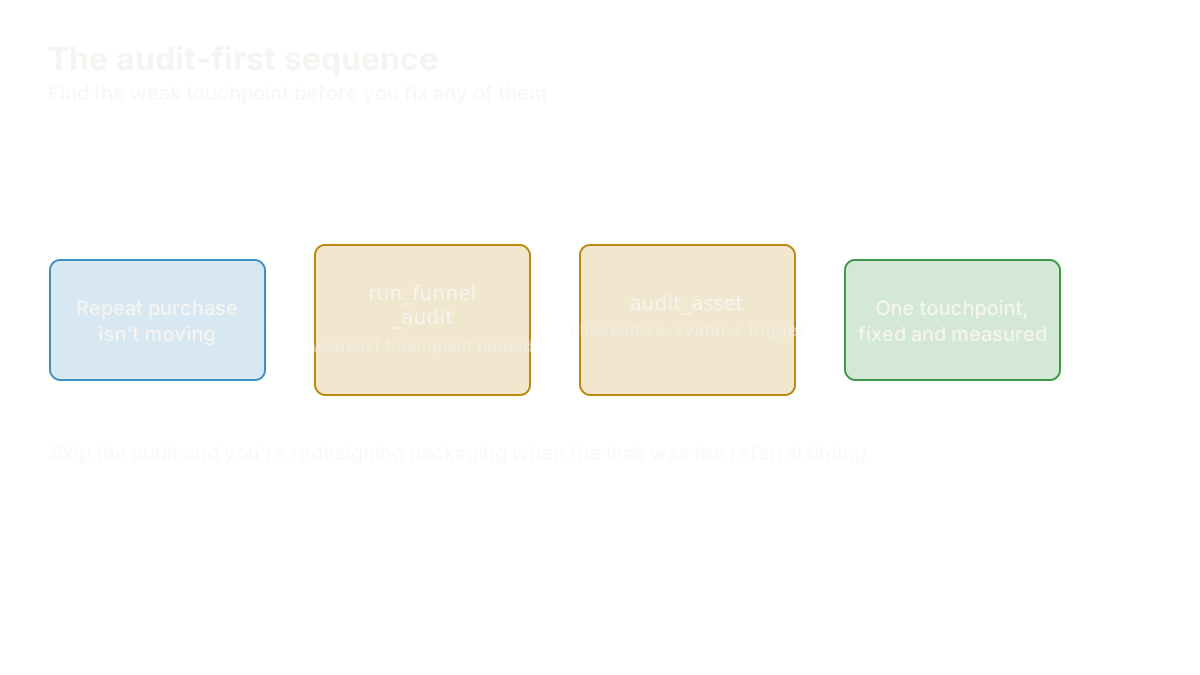
Every diagnosis in this guide runs the same two-tool sequence. run_funnel_audit scores the whole Retention-and-Advocacy stretch of your funnel per avatar and names the weakest touchpoint — packaging, insert card, referral, or loyalty — instead of asking you to guess. audit_asset then goes one level deeper on that specific touchpoint, checking it against the avatar it's supposed to be speaking to and the decision trigger it's supposed to be pulling. ingest_evidence feeds both of those with real customer language instead of founder assumption, and get_funnel_coverage catches the touchpoint that isn't there at all, which is a different failure mode than a touchpoint that's there but weak.
The order matters. Redesigning packaging before running the audit is the single most common mistake in this cluster, because packaging is the touchpoint founders can see and referral coverage gaps are the ones they can't. Run the audit first. Let it tell you which one of the four is actually costing you repeat purchase and advocacy, then fix that one, then re-run the audit before touching the next.
What to measure after any advocacy-funnel fix
Repeat-purchase rate and time-to-second-order are the two numbers that actually move when an advocacy-funnel fix works; review volume and star rating move too but more slowly and with more noise. Give any single change — a new insert card, a re-timed referral ask, a loyalty community's first cohort — a full purchase cycle before judging it, not two weeks, because advocacy behavior compounds slower than a listing-page CTR test. If nothing moves, run_funnel_audit again before assuming the fix failed: sometimes the touchpoint you fixed wasn't the binding constraint, and a different one on this list still is.
If you don't know which of these four touchpoints is actually leaking on your own funnel, the free diagnostic scores your Trust Gap in six questions and points you at the weakest pillar behind it.
FAQ
Does packaging and unboxing actually affect Amazon repeat purchase?
Yes, but only when it's doing a specific job, not just looking premium in a photo. Run ingest_evidence on your own reviews to see whether customers mention the unboxing moment at all before investing further in packaging design, and treat the result as evidence rather than a design opinion.
What makes a good insert card for an Amazon brand?
A good insert card speaks to the actual reason the customer bought (their decision trigger — recognition, identity, or belonging) instead of just offering a discount for a review. It also needs its QR-code destination and copy to stay current after a rebrand, and it needs to be checked per avatar if your brand serves more than one customer type.
Why isn't my Amazon referral program working?
Most underperforming referral programs fail on timing, not incentive size — asking before the customer has proof the product works, instead of at the moment they actually feel the momentum trigger. A missing referral program shows up as a coverage gap when you run get_funnel_coverage; an underperforming one shows up as a weak asset when you run audit_asset.
Should my Amazon brand build a loyalty community?
Only once the funnel audit shows packaging, insert cards, and referral are already pulling their weight — a loyalty community is the most expensive touchpoint in the advocacy funnel and the easiest to build too early as a fix for a problem that actually lives somewhere cheaper to repair. Run run_funnel_audit first and let the weakest touchpoint, not your instinct, decide what's next.
How do I know which advocacy touchpoint is my weakest link?
Run run_funnel_audit across packaging, insert cards, referral, and loyalty before redesigning any one of them — it names the weakest touchpoint per avatar instead of leaving you to guess based on which one you can see most easily. Follow it with audit_asset on whichever touchpoint it flags, fix that one thing, then re-run the audit before moving to the next.
The amazon brand advocacy funnel only ever has one binding constraint at a time, whether that's a card that never mentions why the customer bought, a referral ask fired at the wrong moment, or a loyalty community built before the cheaper touchpoints were even working. Run the audit, name the weak link, fix it, measure the next purchase cycle, and repeat.
Find the Trust Gap costing you sales
The free IDEA Brand Coach diagnostic reads your listing and your reviews, then shows you where your read of your brand and your customers' differ. 4 questions while it works. No account needed for your score; create a free one to keep the full read and your design brief.
Run the free diagnostic →