Amazon Brand Story Not Converting? Full Fix Guide
Amazon brand story not converting is rarely a proof problem for Amazon brand owners. It is a sequence problem, and the fix starts with treating the Brand Story module as one continuous narrative instead of a fourth set of bullets. If your conversion rate has sat flat since you added A+ content, the module isn't missing. It's just not doing anything. This guide is the full diagnosis: what the module is actually for, the five most common ways it fails, how the same failure shows up on your storefront About page, and the test that proves a rewrite worked.
Amazon Brand Story Not Converting: The Real Cause
Amazon gives you exactly one module built to carry a story: five addressable beats, stacked into one continuous 1472×3008 editorial composition, meant to build across the page the way a good pitch builds: sequence, stakes, a reason to keep scrolling. Most brand owners fill it with the wrong thing. They restate the same three claims from their bullets in a nicer font, open with a founding date instead of a customer's problem, or write to the audience they imagine instead of the one actually buying.
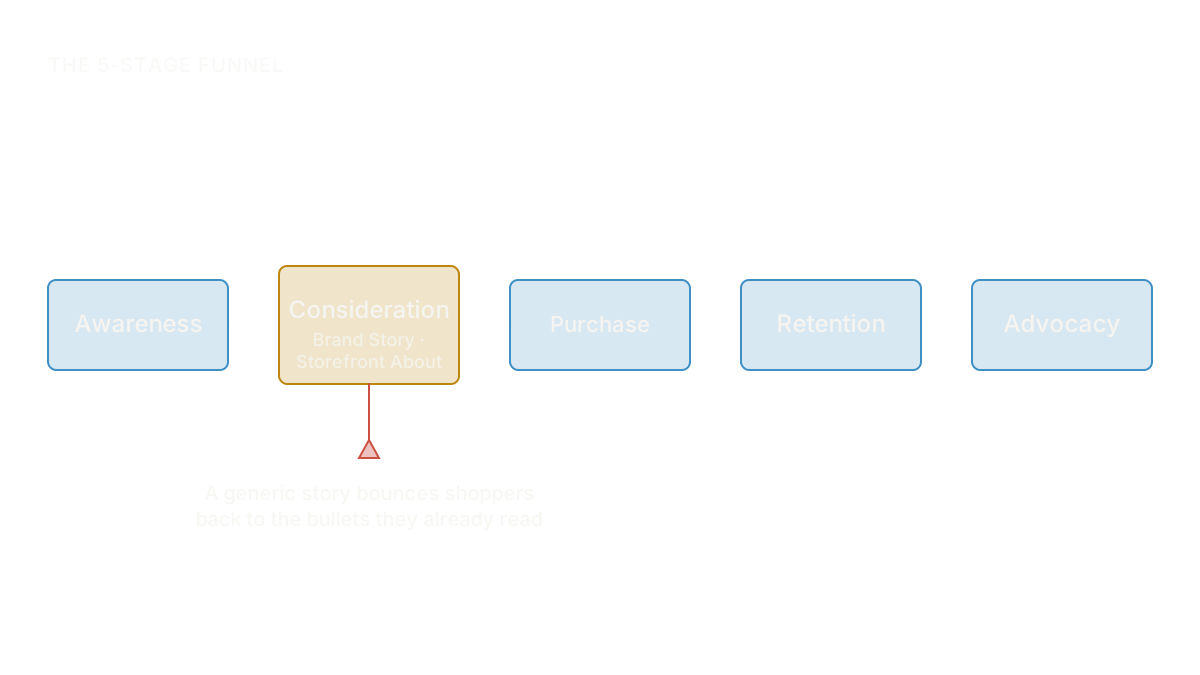
None of that shows up as an obvious four-alarm error. Amazon still renders the module. The star rating is fine. Traffic is fine. But a shopper who already read your bullets scrolls into panel two, recognizes nothing new, and drifts back up to the buy box. That's the pattern behind a luggage brand's Brand Story module that just repeats its own bullet points. Five beats built, one story told, because the plan treated the module as a canvas instead of a caption.
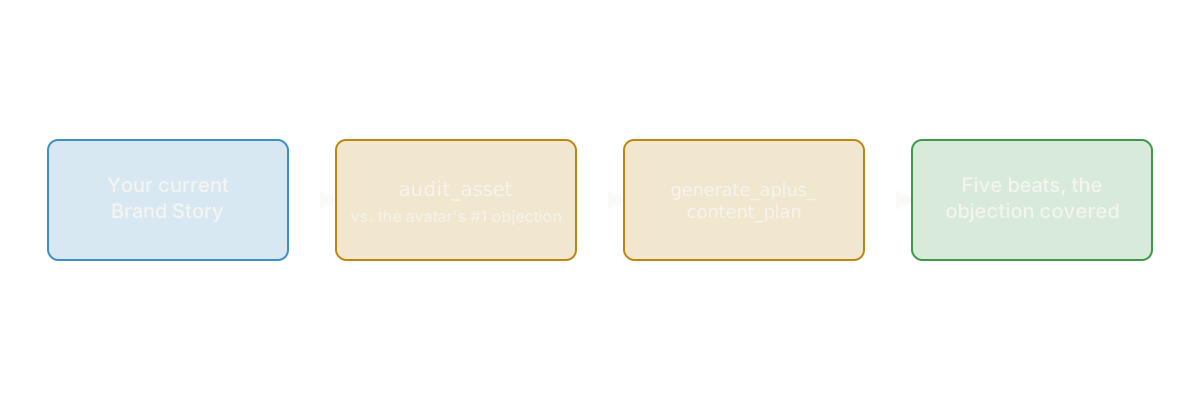
The diagnosis lens here is structural, not evidentiary. In IDEA terms (Insight-Driven, Distinctive, Empathetic, Authentic), none of the four pillars is necessarily broken. The format itself is unused. audit_asset checks one asset against the avatar it's supposed to be speaking to, and for a Brand Story that's the first move: does this module say anything the bullets haven't already said, in the order a skeptical buyer needs to hear it? Once the audit names which beats are dead weight, generate_aplus_content_plan rebuilds the whole five-beat composition as one continuous piece instead of patching a single panel.
The Felt-Moment Image Gap Killing Your Gallery
The second failure sits inside the gallery, not the copy. Most Brand Story image sets are product-on-white, repeated five times with different crops. What's missing is the felt-moment slot, the one panel that shows the product actually being used, in the exact scenario the buyer pictures themselves in, not staged on a seamless backdrop. A weighted-blanket brand losing shoppers at panel three has this exact gap: five competent product photos, zero moments a tired parent can recognize as their own evening. The felt-moment photo your Brand Story gallery is missing walks the fix: generate_listing_image_brief scopes the image SET including that lifestyle slot, briefed against the real product photo so the felt moment still looks like your product, not a stock substitute.
This is where the coach plans and Higgsfield renders. The brief specifies which beat needs the felt-moment shot, what the scene should communicate, and the reference-kit discipline that keeps the product consistent across every panel. Nothing here invents a customer testimonial or a result. It directs a photoreal scene that shows the product doing its job.
Your Hook Is "Founded in 2019." Here's the Fix
Beat one carries the most weight and gets the least thought. "Founded in 2019 by two friends who loved the outdoors" is a fact about you, not a hook for the shopper. It asks them to care about your company before you've shown them you understand their problem. A gardening brand that opens this way is burning the one beat built to earn attention on a claim nobody scrolling a search results page is looking for.
Why your Amazon Brand Story hook is a company-history slide, not a hook covers the fix: open on the buyer's situation, not your founding date, and save the distinctive brand line (the one sentence that makes your positioning memorable and repeatable) for the moment it lands hardest, not the first line where it competes with an unearned introduction. generate_signature is the tool that produces that distinctive line in the first place, separate from the story beats that carry it.
Matching the Story to the Real Buyer, Not the Founder's Assumed One
A story can be well-sequenced and still miss, if it's aimed at the wrong person. A cycling-accessory brand whose founder rides competitively will, by instinct, write the Brand Story for a competitive cyclist, while the actual buyer, according to the sales data, is a commuter buying a light for visibility on a dark road home. Same product, two different jobs, and a story optimized for the wrong one reads as tone-deaf rather than distinctive to the person actually reading it.
build_avatar_stage builds the forensic avatar in sequence: S1 vocabulary, S2 job map, S3 decision triggers, S4 objections, drawn from real evidence rather than a founder's assumption. When your Brand Story is written for the wrong avatar shows what happens when that step gets skipped, and what changes once the story is rebuilt from the buyer who's actually converting, not the one the founder pictures.
Auditing the Story Against the Avatar's #1 Objection
Once the audience is right, the story still has to earn trust against a specific fear. Every category has one recurring objection standing between "I like this" and "I'll buy this": for a hypoallergenic jewelry brand it might be "will this actually not irritate my skin," and a Brand Story that never addresses it, however well-written, leaves the buyer's real question unanswered. The one objection your Amazon Brand Story never addresses is the audit version of this problem: running audit_asset against the avatar's documented objections, not against a generic checklist of "good copy" traits.
The same gap shows up one level up, as a pillar problem rather than a missing beat. A skincare brand's story can be technically correct and still read as interchangeable with every other skincare brand's story, generic enough to be true of almost any product in the category. That's an Authentic-pillar gap specifically: nothing false, nothing wrong, just nothing that could only be said about this brand. Why your Amazon Brand Story reads exactly like every other skincare brand's traces that gap back to the Trust Gap score and what assess_idea_dimensions actually measures when a story scores low on Authentic despite scoring fine everywhere else.
Extending the Discipline to the Storefront About Page
Everything above applies just as directly to your Amazon Storefront About page, which sits in the same Consideration stage of the funnel and carries the same job: turn "interested" into "I trust this brand enough to buy." Most About pages fail for one of the same five reasons, dressed differently.
Some read as a wall of unrelated sections with no unifying message tying the brand together, an embroidery-kit storefront where the About page, category tiles, and hero banner each say something slightly different about what the brand stands for. Why your storefront About page has no unifying message is that diagnosis. Others are internally consistent but forgettable, a cleaning brand's About page a shopper couldn't repeat back five minutes after reading it, missing the one memorable brand tagline that would make the positioning stick. The nothing-memorable problem in your storefront About page covers that fix.
A third pattern: the About page is quietly carrying the entire funnel's weight because every other touchpoint upstream and downstream is thin, which a tech-accessory brand discovers only once get_funnel_coverage shows just how many touchpoints have nothing else covering them. When your storefront About page is doing the whole funnel's job is the coverage-gap version of this problem, and fixing the wrong touchpoint on your storefront About page covers the companion mistake: redesigning the About page when run_funnel_audit actually points at a different, weaker link in a travel brand's funnel.
The last variant is the founder-history problem from beat one, recurring at storefront scale: an About page that tells the founder's story in detail and never states the customer's job to be done. A planner brand's About page can read beautifully and still never say, in plain terms, what problem the planner solves for the person buying it. Your storefront About page tells your story, not your customer's job is that fix, built from the same job-map step build_avatar_stage produces for the Brand Story module. generate_storefront_messaging_plan is the tool that rebuilds the storefront as one system (hero, brand story, tagline, and job-mapped category tiles) rather than patching each section in isolation.
Designing the Test, Not Just the Rewrite
A rewrite without a measurement plan is a guess with better production values. Before you ship a new Brand Story or About page, decide what you're actually watching. Brand Analytics gives you scroll depth and dwell time on the A+ module, the leading signal, and one that moves within days. Say your current module shows shoppers dropping off at beat two; after a rewrite, watch whether they're reaching beat four and five instead. That's the structural fix working, before conversion rate has had time to catch up.
Conversion rate is the lagging number, and it deserves three to four weeks before you read it, longer for a considered purchase. design_test turns "I think this will work" into a structured hypothesis with a defined before/after, and compute_trust_gap_lift gives you the delta on the underlying pillar score once the new version has run. If your rewrite specifically targeted the Authentic or Empathetic pillar, that's the number that should move first, ahead of the topline conversion rate.
The One Next Action
Open your current Amazon Brand Story and read it start to finish as the shopper who just finished your bullets thirty seconds ago. If any beat tells you something you already know, that beat is dead weight. If you're not sure whether the Brand Story is your actual weakest link or just the easiest thing to suspect, the free diagnostic takes six questions, no account required, and tells you which IDEA pillar is actually costing you conversion before you rebuild a module that might not have been the problem. Run audit_asset against your real avatar first, then decide whether an Amazon brand story not converting is a Brand Story problem, a storefront problem, or both.
FAQ
Why isn't my Amazon A+ Brand Story converting even though my star rating is good?
A healthy star rating proves the product works; it doesn't prove the Brand Story module is doing its job. The most common cause is a module that restates bullet claims instead of building a sequence, which gives a shopper who already read the bullets no reason to keep scrolling. Run audit_asset against the module to see whether any beat adds information the buyer hasn't already seen.
What's the difference between an Amazon Brand Story and a Storefront About page?
The Brand Story is an A+ Content module attached to a specific listing; the Storefront About page is a standalone page inside your Amazon Store. Both sit in the Consideration stage of the funnel and both fail for the same reasons: generic messaging, a founder-history hook, or no clear customer job to be done. The same diagnosis and fix apply to each.
How long should an Amazon Brand Story be?
Length isn't the lever. Amazon's Brand Story module is a fixed five-beat, 1472×3008 composition regardless of how much copy you write. The question is whether each of the five beats earns its place with something the shopper hasn't already read, not how many words fill it.
What should I measure after rewriting my Brand Story?
Watch scroll depth and dwell time in Brand Analytics first; it moves within days and tells you whether shoppers are making it further into the module. Conversion rate is the lagging signal and needs three to four weeks, and compute_trust_gap_lift shows whether the specific IDEA pillar you targeted actually improved.
Does a distinctive brand tagline belong in the Brand Story or the About page?
Both, used consistently. A distinctive brand line generated once and repeated across the Brand Story's strongest beat and the storefront About page's hero does more for recall than two different taglines competing for attention. Consistency is what makes a line memorable, not novelty in each placement.
The bottom line
Amazon brand story not converting is almost never a length problem — it's a module that restates the bullets, opens on founder history, or skips the one objection the buyer needs answered before they trust you. Diagnose which IDEA pillar the Brand Story fails to prove, rewrite only the beats that aren't earning their place around a real customer job, and keep one distinctive line consistent across the module and the storefront. Run the free trust gap diagnostic to see which pillar is dragging your brand story down before you rewrite a single beat.
Find the Trust Gap costing you sales
The free IDEA Brand Coach diagnostic reads your listing and your reviews, then shows you where your read of your brand and your customers' differ. 4 questions while it works. No account needed for your score; create a free one to keep the full read and your design brief.
Run the free diagnostic →