Amazon Brand UGC Ad Strategy: The Complete Guide
An amazon brand ugc ad strategy that actually holds up past week two treats fatigue, influencer briefs, and reposted fan videos as one diagnostic problem, not three separate creative tasks, and this guide is for Amazon brand owners running paid social who are tired of watching a winning ad die for no visible reason. If you sell on Amazon and run Meta or TikTok ads pointed at your listing, the pattern below shows up on every account eventually: a hook that worked stops working, an influencer sends back ten identical "obsessed with this" clips, and a folder of permissioned customer videos never gets used. None of those are separate problems. They are the same missing diagnosis, wearing three different costumes.
Most founders respond to a dying ad by making something new. New footage, new song, new thumbnail. CTR twitches up for two days and sinks back down, because the ad wasn't stale, it was arguing a point the audience had already stopped listening to. The fix isn't more creative. It's finding which specific thing broke before you touch a single asset.
Diagnosing an amazon brand ugc ad strategy problem before you shoot anything new
Three things can go wrong with paid social and UGC creative for an Amazon-first brand, and they look identical from the outside (a flat or falling CTR) but need completely different fixes.
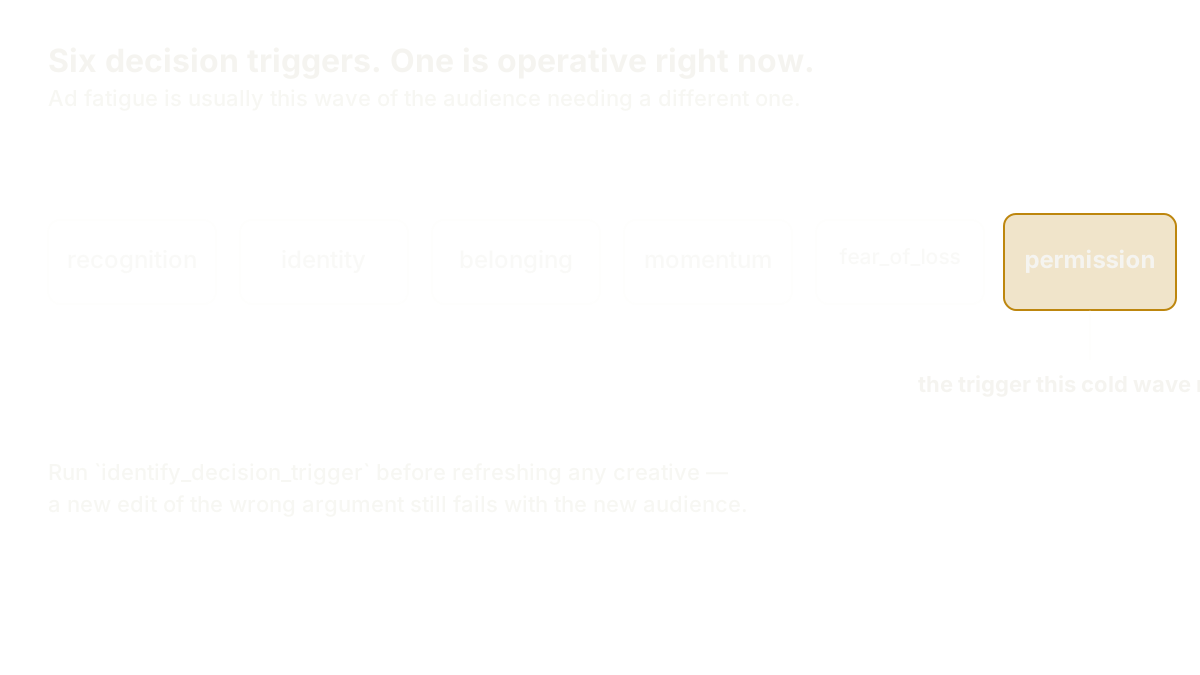
Ad fatigue. A hook that worked for weeks stops converting with no change to targeting or budget. This isn't the creative aging out visually. It's a decision trigger, permission, recognition, identity, belonging, momentum, or fear_of_loss, losing its grip on the audience segment the ad is now reaching. Cold traffic three weeks into a campaign is not the same audience that made the ad work in week one. The exhausted-trigger diagnosis walks through finding the new trigger before refreshing anything.
Hook mismatch. The ad never worked in the first place, or worked for the wrong reason. A transformation-story hook aimed at people who already work out and just want convenience is answering a question nobody in that audience is asking. Diagnosing an emotional hook that doesn't fit the buyer covers how to find the real trigger before you spend another dollar on a concept built on a guess.
Influencer and UGC drift. Free product with no brief produces generic praise: technically UGC, but it doesn't sell anything because it doesn't argue anything. This is the same trigger-diagnosis problem wearing a different production format. The creator has no idea which psychological lever they're supposed to pull, so they default to "I love this."
Run identify_decision_trigger before touching creative in any of these three situations. It names the one psychological lever (permission, recognition, identity, belonging, momentum, fear_of_loss) that a specific ad, hook, or audience segment is actually running on, using what you already know about the buyer and the ad's current performance. Skipping this step is why "test more concepts" so often means spending more money confirming the same wrong guess three times instead of once.
Briefing an influencer with a script, not free product and hope
Sending a creator your product with "post whatever feels natural" is how you end up with ten interchangeable clips that say "obsessed with this" over a ring light glow, content that reads as an ad from the first frame and does nothing for CTR. Why influencer seeding keeps producing generic UGC is the fix: a script-level brief built with generate_ugc_ad_plan, cast from your actual customer avatar, gives the creator a specific angle instead of a vague vibe.
generate_ugc_ad_plan builds a script-level UGC ad (review, try-on, unboxing, or problem-solution format) with the persona cast directly from the customer avatar, three trigger-angled spoken hooks over one shared body, and claim-gated talking points so nothing in the script overpromises. The plan is the difference between "make a video about the product" and specifying the exact doubt the creator's character voices in the first three seconds, and exactly what flips it.
Two production details make or break an influencer brief once the script exists:
The reaction moment survives the edit. An unboxing clip that cuts straight from "opening the box" to a tidy product shot has skipped the one second of footage that actually sells: the unscripted reaction. Your influencer unboxing videos are missing the moment covers briefing creators to leave that beat in, using generate_video_storyboard alongside the UGC plan so the reaction gets a scene of its own instead of getting trimmed for pacing.
The script includes a skeptic flip. Opening a UGC ad with praise reads as an ad instantly. Viewers have seen a thousand "I'm obsessed with this" openers and their guard is already up. The one line missing from your influencer UGC ads is the "I thought X, but…" structure: the creator states the doubt out loud before the product resolves it, which is what makes the clip read as discovery instead of ad copy. generate_ugc_ad_plan builds this flip into the script directly, paired with identify_decision_trigger to pick which doubt is worth voicing.
The skeptic-flip structure that makes UGC read as discovery
The mechanics matter here because they're reusable across every format. A UGC ad that opens with the product already working reads as an ad. A UGC ad that opens with a specific, ordinary doubt ("I've tried three of these and none of them held up") and then resolves it on camera reads as a person figuring something out, which is exactly the frame that gets someone to keep watching instead of scrolling past. The trigger you picked in the diagnosis step decides which doubt to voice: a permission trigger flips "is this too good to be true," a recognition trigger flips "will people notice I'm using this," a belonging trigger flips "is this actually for people like me." Same skeptic-flip skeleton, different doubt, because the skeleton isn't the strategy. The trigger is.
Testing one hypothesis at a time on a thin budget
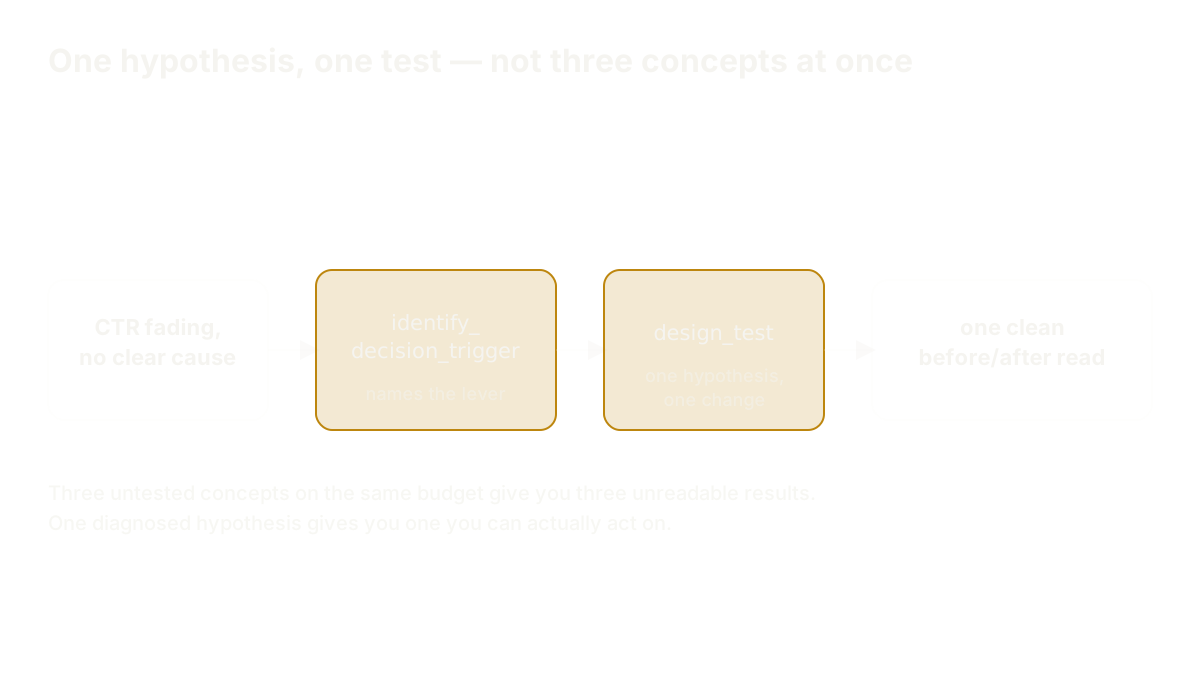
A brand owner with a modest ad budget and three unproven concepts almost never learns anything, because splitting spend three ways means none of the three ad sets reaches statistical significance before the budget runs out. Stop running three untested ad concepts at once makes the case for design_test: turn one specific hypothesis, "this audience needs a permission trigger, not a recognition trigger," into a structured test with a clear before/after read, instead of three concepts competing for the same thin spend.
design_test takes a hypothesis and turns it into a structured test: what's changing, what stays constant, and what result would prove or disprove the guess. Run it against the trigger identify_decision_trigger surfaced, not against three unrelated creative directions at once. Is your ad selling identity when buyers want belonging? is a worked example of exactly this: one trigger swap, tested cleanly, instead of a full creative overhaul.
Format matters here too, separate from trigger. Why video beats a static image in this ad placement covers when generate_video_storyboard earns its place over a still photo: a feed built for motion rewards the one scene a static image structurally cannot show, a reaction, a transformation, a before-and-after in real time. That's a production decision layered on top of the trigger decision, not a replacement for it.
When to repost a customer's own video, and how to pick which one
Paid creative and organic UGC eventually produce a third asset type: a customer's own video, filmed with no brief at all, that performs better than anything the brand paid for. A candle brand founder we'll call Priya gets an unsolicited unboxing clip from a customer that racks up real engagement organically. A customer's unboxing video went semi-viral, now what? is the fix: with permission already granted, generate_ugc_ad_plan takes the raw, rambling clip and turns it into an ad-ready script, keeping the authentic voice while giving it the structure a paid placement needs. ingest_evidence pulls in the original video and any comment-level reaction as evidence for what actually resonated, so the ad-ready cut amplifies the real reason it worked instead of guessing.
Picking which video to repost is its own diagnosis. You have 40 customer videos, which one do you repost? covers a detailing brand sitting on a stack of permissioned clips with no selection criteria beyond "which one has the best lighting." Run identify_decision_trigger against the avatar stage built with build_avatar_stage to find which specific trigger this audience segment responds to, then pick the video that happens to demonstrate that trigger, not the one with the cleanest production values. A slightly rougher clip that nails recognition beats a polished clip that nails nothing.
And permission granted is not the same as permission used. Your best customer videos are sitting in a folder covers a home fragrance brand that collects permissioned UGC diligently and then never deploys it anywhere. get_funnel_coverage finds the specific touchpoint, a gap in influencer_ugc coverage, an under-served retention email, an empty ugc_repost_permissions slot, where that footage should actually be running, and run_funnel_audit confirms it against the avatar rather than guessing at placement. A video sitting in a drive folder converts nobody.
What to measure after any UGC or paid social change
Watch the metric tied to the specific thing you changed, not blended account performance. If you refreshed a trigger on ad-fatigue grounds, watch CTR broken out by audience recency: cold-traffic segments should recover, warm segments (if you're still running the old creative there) should hold steady, and blended CTR hides exactly that split. If you ran a design_test on a trigger swap, the test itself defines the metric before you launch, so you're reading a clean before/after instead of eyeballing a graph. If you reposted a fan video, watch engagement and CTR on that specific placement against the paid creative it's running alongside; a reposted video earning its spot should hold its own, not just feel authentic. get_experiment_lift and compute_trust_gap_lift are the tools for turning any of these into an actual before/after number instead of a vibe.
The next action
Run identify_decision_trigger on your current best-performing ad and the one before it. If the trigger changed and nobody noticed, that's the real diagnosis, not the creative. If you haven't run a full trust-gap read yet, the free diagnostic is the fastest way to find which pillar your funnel is actually weak in before you brief another creator or spend another dollar testing blind.
FAQ
Why does a winning Facebook or TikTok ad suddenly stop converting?
The ad usually didn't get worse, the audience shifted. A trigger that resonated with an early, warmer audience segment (say, recognition: "people like you already figured this out") can fail on a colder wave that needs a different argument, like permission to try something new. Run identify_decision_trigger against the current audience before assuming the creative itself is stale.
How do you brief an influencer so they don't just send generic praise?
Give them a script-level brief, not free product and a vague ask. generate_ugc_ad_plan builds a persona cast from your actual customer avatar with a specific trigger-angled hook and claim-gated talking points, so the creator has an actual argument to make instead of defaulting to "I'm obsessed with this."
What is the skeptic flip in a UGC ad script?
It's an opening line where the creator voices a specific, ordinary doubt about the product before resolving it on camera, like "I've tried three of these and none of them held up." Opening with praise instead reads as an ad instantly; opening with doubt reads as discovery, which is what keeps a viewer watching past the first three seconds.
Should you test multiple ad concepts at once on a small budget?
Usually no. Splitting a thin budget across three unproven concepts means none of them reaches a result you can actually read. design_test turns one specific hypothesis — like a trigger swap — into a structured test with a clear before/after, which teaches you more per dollar than three parallel guesses.
How do you decide which customer video to repost as a paid ad?
Don't pick by production quality alone. Run identify_decision_trigger against your avatar to find the trigger this audience responds to, then choose the clip that happens to demonstrate that trigger, even if a rougher-looking video does it better than a polished one. get_funnel_coverage also helps confirm you have an actual gap in your funnel worth filling with it.
Fatigue, hook mismatch, generic influencer content, and a folder of unused fan videos are the same missing diagnosis wearing different costumes. A working amazon brand ugc ad strategy names the psychological trigger before it touches a single asset, tests one hypothesis at a time, and only reposts a fan video once it knows exactly what that video is proving.
Find the Trust Gap costing you sales
The free IDEA Brand Coach diagnostic reads your listing and your reviews, then shows you where your read of your brand and your customers' differ. 4 questions while it works. No account needed for your score; create a free one to keep the full read and your design brief.
Run the free diagnostic →