Content Marketing for Amazon Sellers: What Works
Content marketing for Amazon sellers usually fails in a specific, diagnosable way: it gets found without getting remembered, for Amazon-first brand owners who are already publishing something (a blog, a LinkedIn post, a founder TikTok) and watching the traffic or view count climb while sales and recall stay flat. This guide is the map across every format: why a page-one SEO post can pull thousands of visits and zero branded search, when a content investment is even worth testing this quarter, why founder LinkedIn and TikTok posts get ignored by an audience that should care, and what a founder should actually say once the camera starts rolling.
You've probably felt the specific frustration this guide is about. The dashboard looks good: organic sessions up, a video with a decent view count, a LinkedIn post that didn't embarrass you. And underneath all of it, the number that actually matters (branded search, comments, click-through to your listing) hasn't moved. That gap is not a distribution problem. It is a trust problem wearing a traffic costume, and it shows up in every content format the same way: work that's competent, on-brief, and completely forgettable.
Content Marketing for Amazon Sellers Starts With a Trust Diagnosis, Not a Content Calendar
The instinct when a blog post or a video underperforms is to publish more of it: a bigger content calendar, a stronger call to action, better SEO structure. That instinct treats the symptom (not enough output) instead of the actual failure, which is usually that the content never earned trust in the first place, so there's nothing for a stronger CTA to activate.
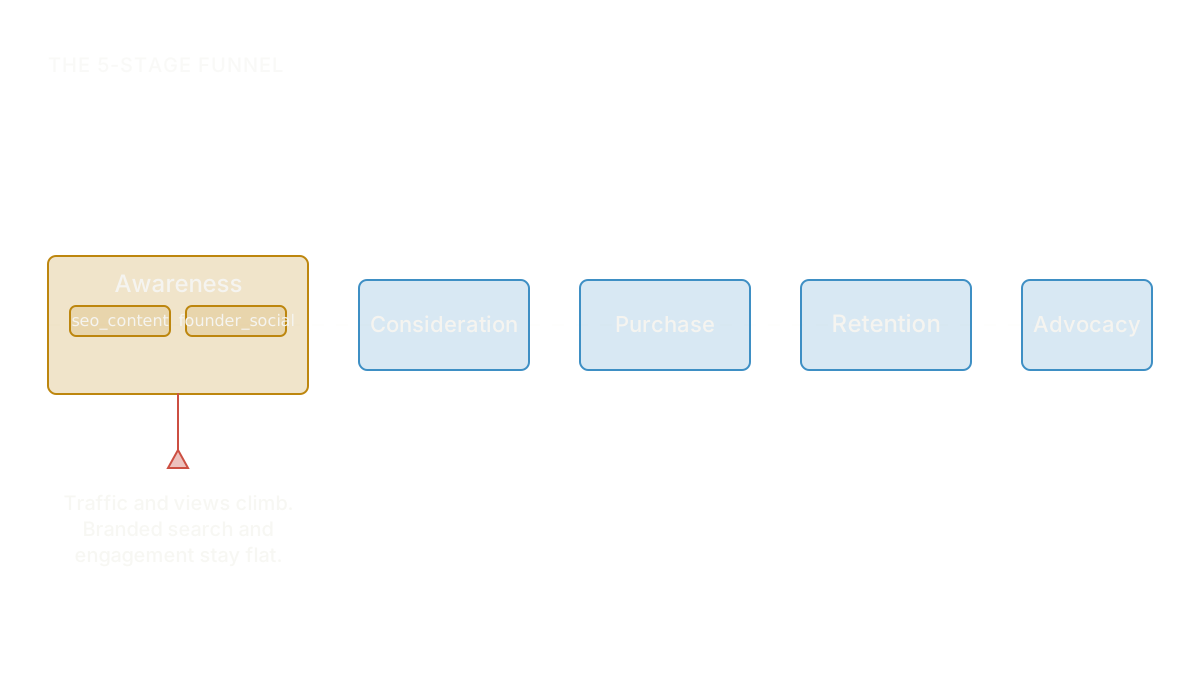
Two different failures hide under "the content isn't converting," and they need two different fixes. The first is a Trust Gap failure: content that's Insight-Driven (well-organized, comparative, factually sound) but never speaks to how the reader actually feels about their situation, which is the Empathetic pillar's job. SEO content that pulls real traffic but builds zero brand recall is exactly this pattern: a "best magnesium for sleep" roundup ranking on page one, read by thousands, remembered by none of them, because it answers "which product" and never once acknowledges what it actually feels like to lie awake at 2am. Running run_trust_gap against the content itself, not just the listing, names the weak pillar directly, and the fix is a reframe, not a rewrite: keep the ranking structure, change what the opening paragraph is actually about.
The second failure is a decision-trigger gap: content that's thorough and well-read but never gives the reader a reason to act right now. A "best of" roundup post that gets four minutes of read time and under 1% click-through is this exact shape: new parents comparing baby carriers aren't short on information, they're managing fear_of_loss about getting an infant's safety wrong, and a spec comparison never speaks to that fear directly. identify_decision_trigger names the specific lever (permission, recognition, identity, belonging, momentum, or fear_of_loss) the content is missing, and the fix is almost always the close, not the body: the comparison stays, the ending stops summarizing options and starts answering the actual fear.
Both failures point to the same underlying lesson for content marketing for Amazon sellers: ranking well and being read are necessary, not sufficient. The content still has to do the same trust work a listing does, just in a different format.
Is a Content Investment Even Worth Testing This Quarter?
Before committing a content calendar and a contractor's time, the honest question is narrower than "does content marketing work." It obviously works for somebody, in some category. The real question is whether it works for your category, at your margins, well enough to justify diverting budget from a channel where the numbers are already known.
Deciding whether an SEO content investment is worth a quarter's budget walks through exactly this decision: a competitor's eighteen-month content result isn't evidence for your own brand's bet, because it's a different category, different keywords, different margin structure. The fix isn't to commit the full quarter and check the numbers at the end. That's a bet with no defined way to lose gracefully, and SEO content is slow enough that a quarter in, you'll have spent the budget and still be looking at thin early traffic that tells you almost nothing.
design_test turns the bet into a bounded experiment instead: a small batch (four to six pieces, not a full calendar), a defined lead-quality metric decided before you see a single number, and a fixed six-week window that ends regardless of how the early weeks look. That structure protects against both failure modes: abandoning a channel too early because week two looks unimpressive, and riding out a full quarter on hope because stopping feels like wasting the sunk cost. Either the small batch clears the bar and you scale it, or it doesn't and you've spent six weeks finding that out instead of a full quarter.
This bounded-test discipline is worth applying before any content spend, blog or otherwise, including the founder-content work covered next, where the temptation to just "post more and see" is even stronger because the cost per piece feels lower.
Why Your Founder LinkedIn and TikTok Content Gets Zero Engagement
Founder personal brand for ecommerce runs into a different version of the same trust gap, but the fix looks like a decision-trigger problem more often than an Empathetic-pillar one. The pattern: a founder posts on a schedule, the posts are accurate and on-brand, and the engagement number simply never moves. A handful of likes, no comments, nothing that looks like an audience actually responding to a person.
Founder LinkedIn posts that average a few likes and zero comments trace back to a specific trigger confusion: founders default to identity framing ("we're passionate about ergonomics") when a founder audience actually responds to recognition, seeing their own struggle, their own near-miss, reflected back in someone else's story. "I almost shipped the wrong hinge and didn't catch it until the second prototype" gets a comment. "We're passionate about quality" gets scrolled past. identify_decision_trigger names which lever actually applies to a given audience instead of defaulting to whichever one feels safest to write.
The video version of this trust gap shows up as a structural problem rather than a topic problem. A "behind the brand" TikTok account posting sincere, unscripted studio footage to 340 views per clip isn't failing because the founder isn't likeable; she's genuinely warm on camera. It's failing because sincerity without an arc reads as a vlog entry, not content: no proof moment for the viewer to wait for, and no clear signal to the algorithm about what the clip is actually about. Running run_trust_gap first is worth doing before touching the video format at all. If the Authentic pillar scores well in the product itself, the fix is structural (build the next video around one proof moment with generate_video_storyboard), not a format change. If Authentic itself is weak, no amount of video structure will fix a real craft gap.
The lesson across both: founder personal brand for ecommerce doesn't fail because a founder isn't authentic enough. It fails because "be yourself" is not the same instruction as "here is the specific trigger your audience needs pulled, and here is the shape that pulls it."
What to Actually Say in Founder Video Content
This is the question that stalls founder video content before it even ships: not "am I on camera enough," but "what am I actually supposed to say." A founder who canceled three shoot days over two months wasn't blocked by camera confidence; he was blocked by a missing input. Nobody had told him what the video needed to do, because nobody had surfaced the specific fear driving his buyer's purchase. "Just be yourself" isn't direction; it's the absence of direction dressed up as permission.
build_avatar_stage, run to its S3 trigger stage, is the fix for this specific blank-page problem. It surfaces the real fear or motivation from actual customer evidence: reviews, comments, the pattern in what people say when they explain why they bought, instead of guessing at what sounds authentic. For a compression-sock brand, S3 surfaced that buyers weren't confident athletes shopping for performance gear; they were people cautiously returning from an injury, afraid of the comeback going wrong a second time. That fear, not the product's technical specs, became the spine of the videographer brief generate_brief produced.
The same diagnosis applies once footage already exists and isn't landing. A candle brand's founder video with a brutal eight-second drop-off had already been reshot for better lighting and audio; production wasn't the problem. The opening line ("we started this because we love candles") was true, generic, and interchangeable with every other founder-story opener in the category. identify_decision_trigger, run against real review evidence, found the actual lever: buyers who'd quietly given up on scented candles entirely because of headaches, now feeling the relief of finally being included by a fragrance-sensitive-safe option. Belonging, not passion. generate_ugc_ad_plan scripted the piece around that trigger directly, with the founding story moved to supporting proof instead of the lead, plus a claim-gated skeptic-flip line and three trigger-angled hook variants to test.
In both cases, the coach's job stopped at the plan. The videographer shoots it; Higgsfield renders any AI-assisted scenes from the reference kit the plan specifies. What the coach's tools decide is what the video needs to say and in what order, the actual bottleneck founder video content keeps hitting.
What Content Marketing for Amazon Sellers Actually Requires
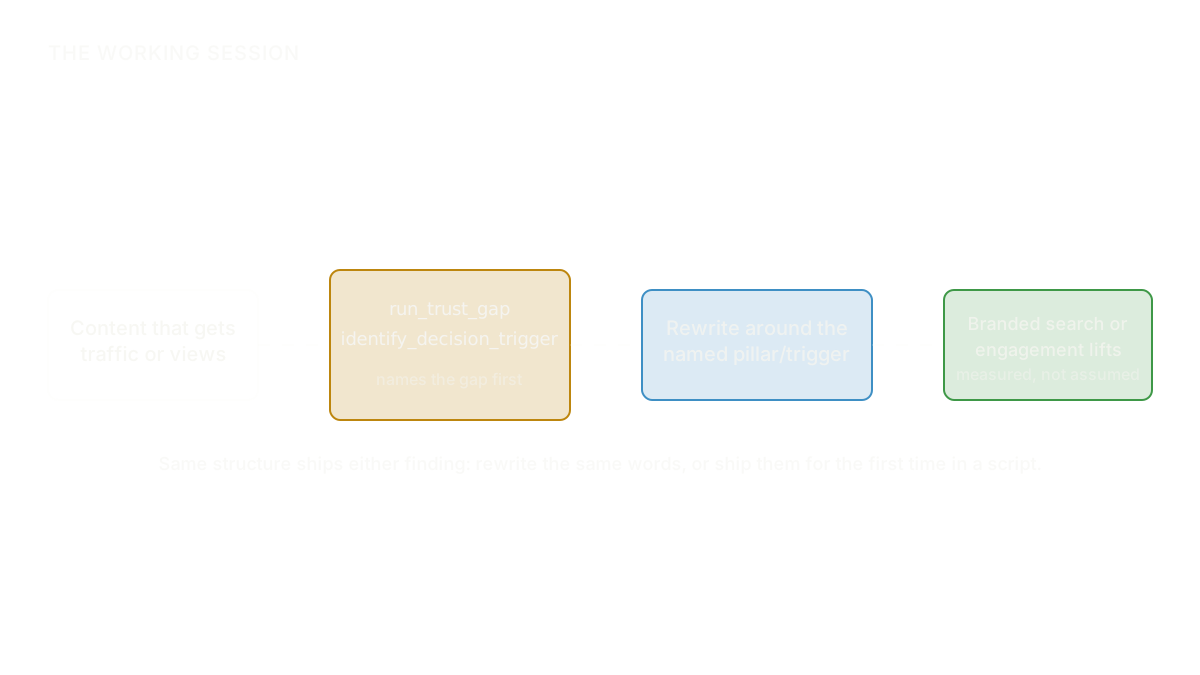
Strip away the format differences and every piece above runs the same diagnosis in the same order: name the pillar or trigger the content is missing before touching a word of the rewrite or a frame of the script. A blog post that's technically ranking doesn't need more keywords; it needs the Empathetic pillar the coach's scorecard names as weak. A founder video that's well-lit and sincere doesn't need better production; it needs the trigger identify_decision_trigger surfaces from real evidence, not from what sounds true to the founder.
The measurement discipline carries across formats too. Content changes take weeks to show up in the number that actually matters (branded search, comments, watch-through past the hook), not the same-session pageview or like count that was already fine before the diagnosis started. Track the specific metric the diagnosis pointed at, give it the weeks it needs, and resist calling a rewrite a failure because the vanity metric that was never broken didn't move further.
If you're not sure yet which pillar or trigger your own content is missing, blog, LinkedIn, or founder video, the free Trust Gap diagnostic is a faster starting point than another content calendar: six questions, no account, and a read on where your brand's trust gap actually sits before you write the next post.
FAQ
Does blog content help Amazon sales at all?
Yes, but only once it does the same trust work a listing does. The traffic itself doesn't sell anything on its own. A blog post can rank well and drive real sessions while building zero brand recall if it reads like a neutral comparison instead of something written from your brand's actual point of view; the fix is naming which IDEA pillar the content is missing, not adding more posts.
Why does my content marketing get traffic but no sales?
This is almost always a Trust Gap or decision-trigger problem, not a distribution problem. Content that's informative but never speaks to how the reader feels about their situation (Empathetic pillar), or that's thorough but never gives a reason to act right now (a missing decision trigger), will drive sessions that never convert into brand recall or clicks.
Should Amazon sellers invest in SEO content or paid ads?
Don't decide that on a competitor's result from a different category and margin structure. Structure a small, bounded test instead: a defined lead-quality metric and a fixed six-week window on a handful of pieces, and let that answer decide whether to divert budget from a channel you already understand.
Why doesn't my founder personal brand content get engagement?
Most founder content defaults to identity framing ("we're passionate about this") when a founder audience actually responds to recognition: seeing their own specific struggle reflected in your story. Swap the polished outcome for the moment of doubt that led to it, and track comments and shares, not just likes.
What should a founder actually say in a founder video?
Whatever fear or objection repeats most across real customer reviews, not whatever sounds true from the founder's own memory of starting the brand. Surface that trigger first, using build_avatar_stage's S3 stage or identify_decision_trigger against review evidence, then script the video's opening around it, with the founding story as supporting proof rather than the lead.
Content marketing for Amazon sellers isn't a volume problem, and it isn't a platform problem. It's the same trust diagnosis a listing needs, run against a blog post, a LinkedIn caption, or a founder video before a single word gets rewritten.
Find the Trust Gap costing you sales
The free IDEA Brand Coach diagnostic reads your listing and your reviews, then shows you where your read of your brand and your customers' differ. 4 questions while it works. No account needed for your score; create a free one to keep the full read and your design brief.
Run the free diagnostic →