Post Purchase Email Strategy for Amazon Sellers
Post purchase email strategy for Amazon sellers starts the moment someone pays
A post purchase email strategy for Amazon sellers is the full set of moments after checkout (welcome, replenishment, winback, order confirmation, and support) treated as one system instead of five unrelated afterthoughts, and if you're an Amazon brand owner, you almost certainly have at most one of these built and the rest missing entirely. That's not a judgment. It's the default. Amazon sellers spend their attention on the listing, because the listing is what gets audited, split-tested, and stared at every morning. The inbox a customer lands in after they buy gets whatever's left, which is usually nothing beyond Amazon's own automated shipping notice.
That's the expensive gap. The moment right after someone pays is the single highest-trust moment you will ever have with that customer. They just handed you money based on a promise your listing made. For the next few days, they're paying attention, they're a little curious, and they haven't formed an opinion about you yet beyond "the thing I ordered." A welcome email, a confirmation email, a winback email eight weeks later. Each one either uses that window or wastes it. Most brands waste all five.
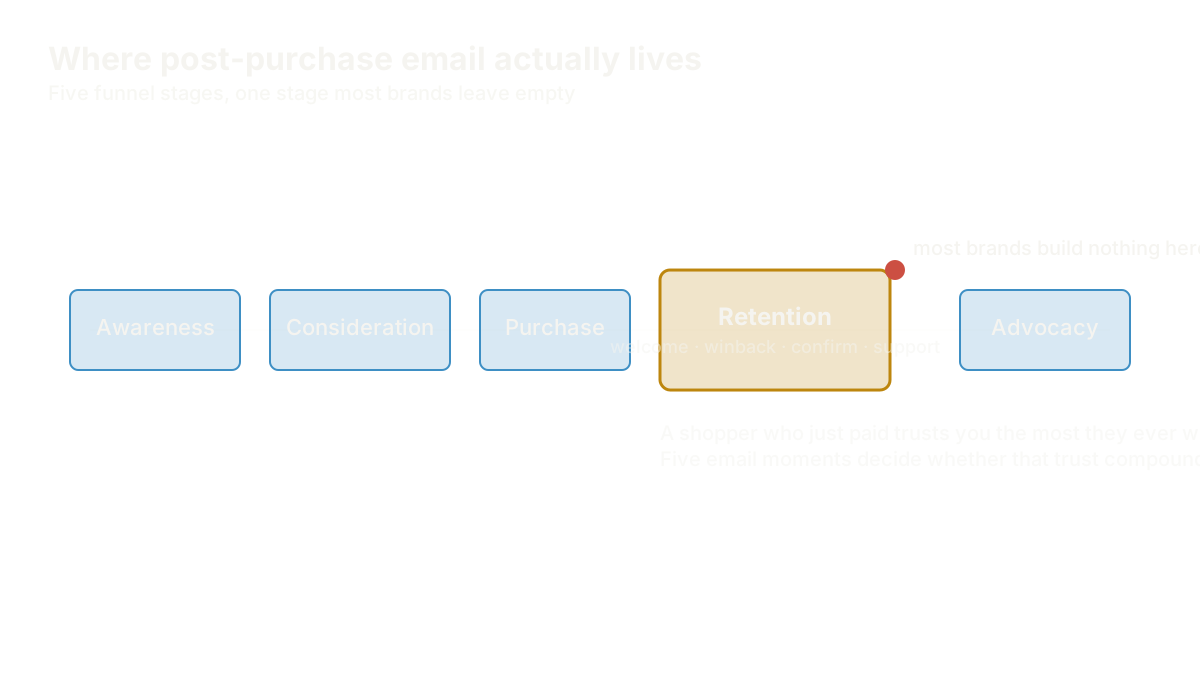
This guide walks the five moments in order: sizing a welcome series correctly, diagnosing why a welcome series gets opened but doesn't produce a second sale, building your first replenishment and winback flow, turning a transactional confirmation email into a real retention touchpoint, and fixing support replies that undo the brand voice you built everywhere else. Each section links to a founder who hit that exact problem and the coach tool that traced it.
How many welcome emails an Amazon brand actually needs
The honest answer is: it depends on how much the customer needs to learn before they trust you enough to buy again, not a round number pulled from a template. create_email_sequence defaults to a 5-step welcome series for a reason: one email to confirm the order emotionally (not just logistically), one to introduce the brand story, one to handle the most common first-use question, one to surface a complementary product or use case, one to ask for a review once the product has had time to prove itself. Five steps map to five real jobs. Adding a sixth because "more touchpoints is more retention" usually just adds noise between jobs that were already done.
One home-fragrance founder had never sent a single welcome email despite forty new signups landing every week from a packaging insert. The addresses were captured and then abandoned in the same motion. The fix wasn't picking an arbitrary number. It was mapping each email to a specific job the customer needed done, then building exactly that many steps, no more.
The "how many" question gets harder when your buyer isn't one person. A dog-joint-supplement brand had two genuinely different buyers on one welcome flow (anxious first-time owners who needed reassurance, calm veteran owners who needed efficiency), and one generic sequence was serving neither well. build_avatar_stage is what separates a real segmentation decision from a guess: it maps each avatar's actual vocabulary, objections, and triggers, so the branch point in your welcome series is based on evidence, not a hunch about "probably two kinds of people buy this."
Why a welcome series gets opened and still doesn't sell
Open rate is the easiest number to check and the least useful one for judging whether a welcome series is working. A sequence can open at 40%, which most benchmarks call healthy, while repeat purchase sits flat for months. A coffee-subscription founder had exactly this gap (strong opens, no reorders), and the instinct that follows almost every time is to rewrite the subject lines. That's treating the wrong metric as the diagnosis.
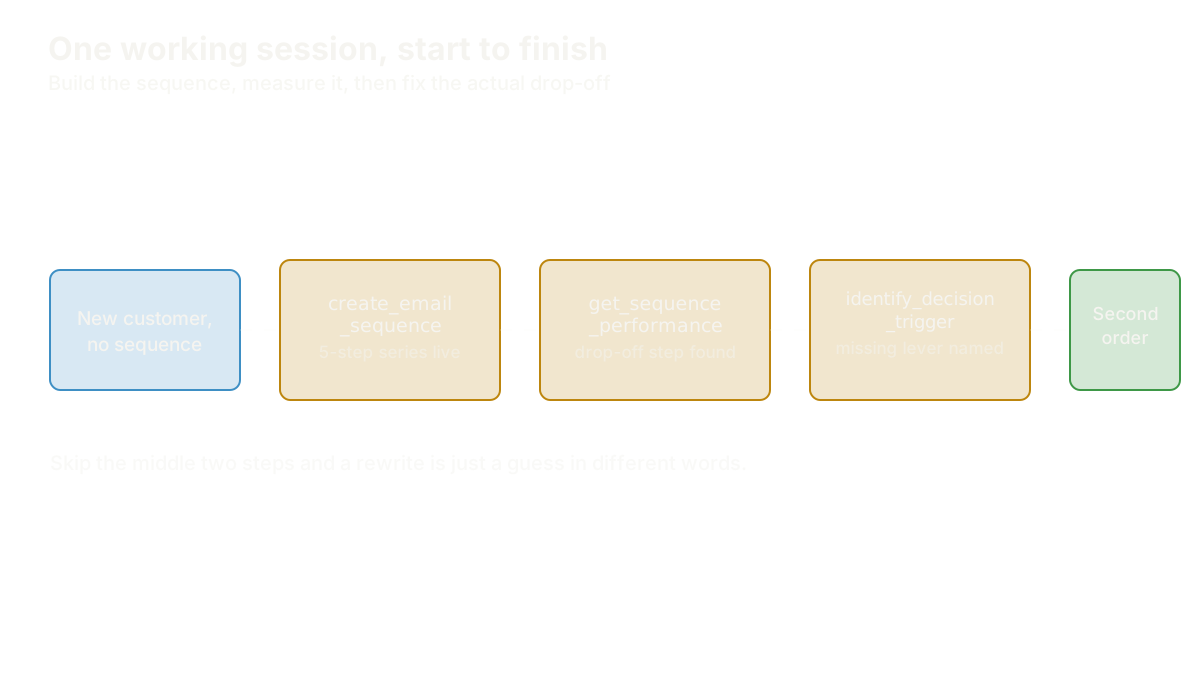
get_sequence_performance traces where in the sequence people actually drop off, not just whether they opened the first email, which is the only way to find the real break. Sometimes the break is a missing step: the sequence tells the brand story but never actually asks for the second order in a way that matches how the customer thinks about repurchasing. Once that missing step is identified, add_email_step slots the fix in at the exact point in the sequence where it was needed, instead of rewriting five emails that weren't the problem.
Sometimes the drop-off isn't a missing step at all. It's a missing psychological lever. A resistance-bands founder's welcome series read fine and converted nothing, because every email skipped the one decision trigger that would have gotten a reader to click instead of just read. identify_decision_trigger names that lever before you touch a single word of copy.
A welcome series can also be doing its job on paper (clean copy, decent open rate) and still be missing the one thing that makes someone act now instead of later. A skincare brand's welcome flow was five well-written paragraphs of text while her Shopify About page, built as a ninety-second video of her actually talking, held attention the emails never came close to. generate_video_storyboard plans that kind of asset directly for the welcome series — a brand_story cut instead of the plainer written version, and Higgsfield renders it once the plan is locked. Text explains a brand. A founder's actual voice on camera does something a paragraph structurally can't.
Building a replenishment and winback sequence that actually gets a reorder
Replenishment and winback solve two different problems that get treated as the same email far too often. Replenishment is timing: remind a customer their consumable is about to run out, before they've gone looking for a substitute. Winback is recovery: re-engage someone who's already gone quiet, weeks or months past when they should have reordered. Conflating the two produces a sequence that's too early to feel useful and too generic to feel personal.
A greens-powder founder had never sent a single reorder reminder, despite knowing almost exactly when her product runs out for a typical customer, say the tub lasts about 30 days. create_email_sequence builds a replenishment flow timed to that real consumption window instead of a generic 60- or 90-day template lifted from a different category. A supplement that runs out every 30 days and a candle that lasts four months need entirely different timing logic, and the sequence should reflect the product's real usage pattern, not an industry-default number.
Winback is where the "just discount it harder" instinct causes the most damage. A pet-treats brand's winback emails were getting opened (nearly 40%) with almost no reorders following, and the founder's draft fix was to escalate the discount and add a countdown timer. identify_decision_trigger found the actual lever missing from the copy: for a lapsed customer, the operative trigger is usually fear_of_loss or momentum, not price. A steeper discount answers a question the customer never asked.
Winback lists carry their own hidden failure mode: they're often full of people who were never going to reorder in the first place. A car-care wax brand's winback sequence targeted gift-buyers alongside genuine repeat customers, and no copy change moved a flat reorder rate because the audience itself was wrong: a one-time gift purchaser doesn't have a reorder cycle to interrupt. build_avatar_stage separates a gift-buyer profile from a genuine-repeat-customer profile before the sequence gets rebuilt, so the winback flow only targets people who were ever going to say yes.
Winback also has a video version worth considering when text alone isn't landing. A cable-management brand's only winback email was a flat discount ask that assumed the customer remembered why they bought in the first place — for most lapsed customers, that memory has faded faster than the discount accounts for. generate_video_storyboard plans a short reminder video around the trigger identify_decision_trigger names, giving the winback moment something to say beyond "here's a coupon."
Turning a transactional confirmation email into a real retention moment
The order confirmation email is the fastest-arriving message in the entire post-purchase sequence and the one brands treat as pure logistics: order number, estimated delivery, a tracking link. It fires within minutes of purchase, when trust is at its highest point of the entire relationship, and most brands hand that moment to a template that reads like a receipt.
An eco-cleaning-products founder's welcome series was the one she was proud of (brand story, personality, real thought behind it) while her confirmation email, which actually arrives first and gets opened at a far higher rate simply because it's expected, said nothing beyond the shipping details. identify_decision_trigger names what that specific buyer needs to feel right after paying (often recognition, a sense that the brand sees them as a person and not a transaction ID), and add_email_step folds one or two sentences of that into the confirmation without turning it into a second welcome email. The confirmation doesn't need a redesign. It needs one honest sentence that isn't about shipping.
Don't skip measuring it. A men's-grooming founder added a short brand note to his confirmation email and then had no way to say whether it actually changed anything, because he never ran the before/after comparison. compute_trust_gap_lift and get_sequence_performance turn "it feels nicer now" into an honest before-and-after read.
Fixing support replies that sound like a call center
Brand voice usually holds up everywhere it's visible and collapses exactly where it's least visible: customer support. The listing has personality, the packaging has a joke on it, the social presence is playful and specific. Then a customer emails with a question and gets back a reply that could have come from any company selling anything.
A dog-toy brand's support replies read like a script while every other touchpoint carried real personality, and run_trust_gap traced the gap to the Authentic pillar specifically — not a proof problem, not a clarity problem, a mismatch between the voice the brand promises everywhere else and the voice it delivers when a customer actually needs help. audit_asset checks a support template against the avatar the same way it checks a listing image or a bullet point, which is the detail most founders miss: support copy is a brand asset, not an operations document, and it deserves the same audit discipline as anything customer-facing.
Support voice also has a proactive version that prevents the ticket from ever needing an authentic reply in the first place. A flat-pack-furniture brand saw a predictable spike in "where is my order" tickets whenever a shipment ran long, and a chunk of those tickets converted into refund requests before the item even arrived. identify_decision_trigger named the anxiety driving the ticket (momentum interrupted, the customer's plan for the item disrupted by silence), and add_email_step inserted one proactive message at the point delays typically started, well before the customer needed to ask. The best support voice fix is sometimes the message that makes the support ticket unnecessary.
What to measure after any post-purchase email change
Every change in this guide has one honest test: does the number downstream of the email actually move, not just the open rate. For a welcome series, that's repeat-purchase rate in the weeks after the sequence completes. For replenishment and winback, it's reorder rate against a stable list, not a list quietly shrinking or growing for unrelated reasons. For the confirmation email, watch whether adding a sentence of brand voice changes anything measurable at all: get_sequence_performance gives you the honest read rather than a felt sense that the email is "nicer now." For support, track ticket volume and refund rate around the specific trigger you fixed, not overall satisfaction scores that move for a dozen unrelated reasons.
Give each change two to three weeks of stable traffic before judging it. Post-purchase email effects are slower and quieter than a listing-image test, because the audience is smaller and the behavior you're measuring (a second purchase, a reply tone, a ticket that never gets filed) takes longer to show up cleanly in a weekly number.
If you haven't run a Trust Gap read on your funnel at all yet, the free diagnostic scores where your brand is weakest across all four IDEA pillars in six questions, which is often the fastest way to see whether your retention gap is a sequencing problem or a deeper Authentic or Empathetic pillar issue showing up downstream of the sale.
FAQ
What is a good post-purchase email strategy for an Amazon brand?
A good post-purchase email strategy covers five distinct moments: a welcome series sized to the number of jobs a new customer actually needs done, a replenishment or winback flow timed to the real consumption cycle, a confirmation email that carries at least a sentence of brand voice, and support replies that match the tone used everywhere else. Most Amazon brands have one of these five built and the rest missing; treating all five as one system, rather than five separate afterthoughts, is what separates a real strategy from a template.
How many emails should be in an Amazon welcome email sequence?
Five is a reliable default because it maps to five real jobs: confirm the order emotionally, tell the brand story, answer the most common first-use question, surface a complementary product, and ask for a review once the product has had time to prove itself. create_email_sequence builds to that structure by default. The right number is whatever your customer actually needs to learn before they'd consider buying again, not a fixed count borrowed from a different category.
Why doesn't my winback email get lapsed customers to reorder?
The most common cause isn't the offer, it's the missing psychological trigger: a winback email built around a bigger discount when the customer actually needed a reminder of why they bought in the first place (fear_of_loss or momentum) will underperform no matter how deep the discount goes. identify_decision_trigger names the actual lever for a lapsed customer, and a second, cheaper cause is worth ruling out first: a winback list padded with gift-buyers who were never on a reorder cycle to begin with.
Should my order confirmation email have marketing content in it?
Not marketing content: brand voice. The confirmation email arrives within minutes of purchase, when trust is highest, and most brands waste it on pure logistics (order number, delivery date, tracking link). One honest sentence that reflects the actual brand voice, tied to the specific trigger the buyer responds to, does more than a full redesign. It shouldn't turn into a second welcome email; it should stay a confirmation email that also sounds like you.
How do I make customer support replies match my brand voice?
Audit support templates the same way you'd audit a listing image or a bullet point — audit_asset checks the copy against the avatar directly, and run_trust_gap will usually surface the gap as an Authentic-pillar issue rather than a tone-of-voice preference. The fix is rarely "write friendlier scripts." It's identifying the specific mismatch between the personality your brand shows everywhere else and the generic register support defaults to, then closing that one gap.
A post purchase email strategy for Amazon sellers isn't five separate projects competing for attention on a to-do list. It's one system, built around the highest-trust moment you'll ever get with a customer, and every piece of it (welcome, replenishment, winback, confirmation, support) either compounds that trust or lets it evaporate. Start with whichever of the five is currently empty, size it to the actual jobs the customer needs done, and measure the number downstream of the email, not just whether it got opened.
Find the Trust Gap costing you sales
The free IDEA Brand Coach diagnostic reads your listing and your reviews, then shows you where your read of your brand and your customers' differ. 4 questions while it works. No account needed for your score; create a free one to keep the full read and your design brief.
Run the free diagnostic →